THE COURSE CAN TAKE PLACE IN TWO VARIANTS – YOU CHOOSE WHICH ONE
Hybrid Form
Step one:
After creating an account in our system and selecting the training, each candidate is required to complete the documents required by Ocean Angels in the system,
Step two: Each candidate is required to attend a cycle of three 2-hour online meetings with an OAC instructor. Meetings take place via commonly available video conferencing applications. If the candidate does not have such an application, the meeting takes place in a system provided by OAC.
Step three: E-learning training that must be completed after the online meetings with the OAC instructor. This stage is mandatory for every candidate and is a form of theoretical self-study classes that do not take place in a traditional form.
Step four: In the final stage of theoretical training the participant must complete a test verifying the knowledge acquired in the previous steps. Successfully passing the exam allows registration for on-site training which, depending on the purchased service, lasts from 5 hours to 16 hours (one to two days – depending on the number of participants and their preparation after the previous online e-learning training)
Step five: Completion of the on-site training entitles the candidate, depending on the qualifications*/certificates/licenses they are applying for, to take the exam**. Exams take place on the day the on-site course ends or on the following day after completion***.
Step six: Depending on the organization or qualifications chosen by the participant, it remains to submit an application for the document or wait for the document authorizing yacht operation or confirming the acquired knowledge and skills.
On-site Form
Step one: After creating an account in our system and selecting the training, each candidate is required to complete the documents required by Ocean Angels in the system,
Step two: Each candidate should attend a 30-minute online meeting with an OAC instructor. Meetings take place via commonly available video conferencing applications. If the candidate does not have such an application, the meeting takes place in a system provided by OAC. The purpose of the meeting is to provide basic training materials and prepare the participant for the full on-site training. The meeting is not mandatory; however, the participant has access to training materials for self-study via e-learning.
Step three: Each candidate must participate in a 24-hour on-site training divided into two modules: theoretical and practical. Trainings take place in various locations within European Union countries in facilities designated by OAC.
Step four: Full participation in the on-site training entitles the candidate, depending on the qualifications*/certificates/licenses they are applying for, to take the exam**. Exams take place on the day the on-site course ends or on the following day after completion***.
Step five: Depending on the organization or qualifications chosen by the participant, it remains to submit an application for the document or wait for the document authorizing yacht operation or confirming the acquired knowledge and skills.
* Each participant must pay particular attention to the training offer they selected. Below is the procedure for obtaining national licenses / certificates.
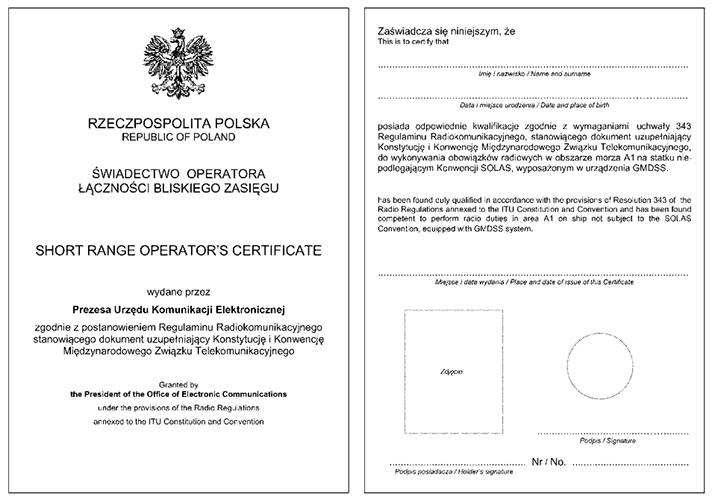
- Obtaining the Motorboat Helmsman or Marine Motorboat Helmsman license issued by PZMiNW on behalf of the Minister of Sport and Tourism and the Minister of Transport, Construction and Maritime Economy (information link) requires passing an exam in the presence of an examiner from the Polish Motorboat and Water Skiing Association or an entity authorized by the Ministry of Sport and Tourism of the Republic of Poland. Exams are organized on the day the participant completes the practical/on-site training. After passing the exam and receiving confirmation, you must submit an application and follow the instructions of the Polish Motorboat and Water Skiing Association >Patent application<
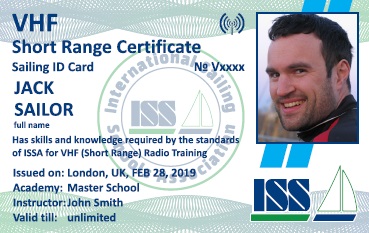
- Obtaining the ISSA International Sailing School Association certificate does not require additional exams; however, OAC conducts its own internal theoretical online exam after the course.
- Obtaining the Motorboat Helmsman, Yacht Sailor, Sea Motorboat Skipper, Yacht Skipper and SRC Radio Operator certificates issued by IRSMA requires passing an internal exam organized by Ocean Angels on the day the participant completes the practical/on-site training. The exam required for obtaining the IRSMA license is a separate exam required by the International Recreation Sailing and Motorboat Association.
** Taking the exam is not mandatory, however it is necessary to complete the process of obtaining the above licenses / certificates.
*** Each participant who selects the Motorboat Helmsman, Marine Motorboat Helmsman, Yacht Sailor or Yacht Master Coastal training – unless stated otherwise in the offer – is automatically registered with the authorized examination body acting on behalf of the Minister of Sport and Tourism. In the "Your Documents" section please upload the required document (ID card or copy of ID) after anonymization – instructions are available in the file Anonymization.PDF available in the system after selecting the training.